Personalized Medical Care & Dedicated International Patient Concierge


Rhinoplasty (Nose Reshaping Surgery) · Needs Clinic Confirmation
Rhinoplasty by Type
Rhinoplasty by type refers to customized surgical techniques designed according to specific nasal shapes and anatomical features.
Schedule a ConsultationRhinoplasty by Type

Rhinoplasty, commonly known as nose surgery, is one of the most individualized and technically complex procedures in plastic surgery. The nose plays a central role in facial aesthetics, affecting overall facial balance, symmetry, and harmony. Modern rhinoplasty focuses on enhancing facial proportions rather than creating a standardized nose shape.
At Sharp Plastic Surgery Clinic in Gangnam, Seoul, rhinoplasty by type is performed using a personalized approach based on each patient’s nasal anatomy and facial structure. This method allows for precise surgical planning and natural-looking results.
This article provides a comprehensive overview of type-based rhinoplasty, including common nasal types, surgical techniques, and postoperative management.
Understanding Rhinoplasty by Type

Rhinoplasty by type refers to customized surgical techniques designed according to specific nasal shapes and anatomical features. Instead of applying a single surgical method, surgeons classify the nose into different categories and tailor the procedure accordingly.
The primary goals of customized rhinoplasty include:
Improving facial balance and symmetry
Enhancing nasal structure and function
Achieving natural-looking rhinoplasty results
Avoiding an overcorrected or artificial appearance
At Sharp Plastic Surgery, all procedures are performed by a board-certified plastic surgeon, ensuring accurate diagnosis, precise surgical planning, and consistent outcomes.
The Importance of Personalized Nose Design
Every patient has a unique facial structure, including differences in the forehead, eyes, cheekbones, lips, and jawline. Because the nose is the center of the face, facial harmony must be considered during rhinoplasty planning.
Personalized rhinoplasty includes:
One-on-one consultation with the surgeon
Detailed facial proportion analysis
Customized surgical planning
Surgeon-performed consultation, surgery, and aftercare
This individualized approach helps create balanced, refined, and natural nasal contours that complement the entire face.
Common Nose Types and Surgical Considerations
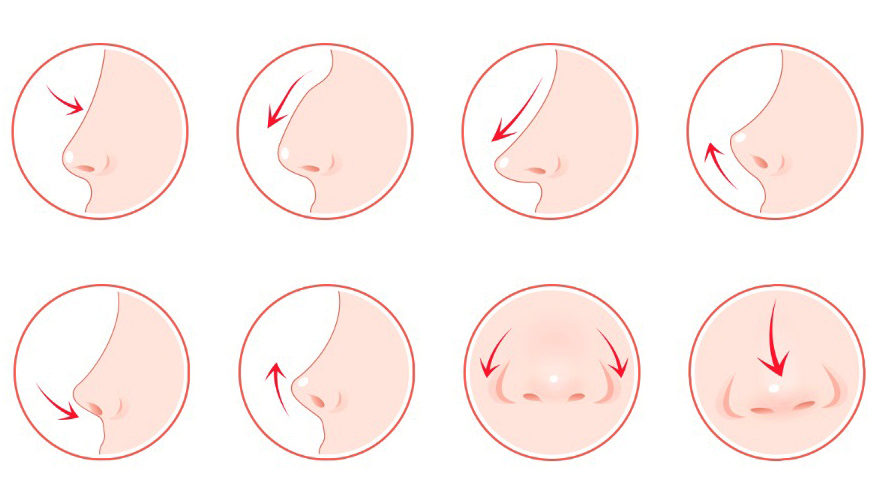
1\. Low Nose (Flat or Low Bridge Nose)
Characteristics
A low nose has insufficient nasal height, which can make the face appear flat or less defined. Patients may lack three-dimensional facial depth.
Surgical Approach
Low nose rhinoplasty typically involves:
Elevating the nasal bridge
Defining the nasal starting point
Using implants or autologous cartilage for augmentation
The goal is to create a natural bridge height that suits the patient’s facial proportions.
2\. Hump Nose (Dorsal Hump Nose)
Characteristics
A hump nose has protruding bone or cartilage on the nasal bridge, often creating a strong or harsh facial impression.
Surgical Approach
Hump nose correction includes:
Removing or reshaping protruding bone and cartilage
Smoothing the nasal dorsum to achieve a straight or softly curved profile
This procedure aims to soften facial expression while maintaining structural integrity.
3\. Long Nose
Characteristics
A long nose has a high nasal starting point and extended nasal length, which can make the midface appear elongated.
Surgical Approach
Long nose rhinoplasty focuses on:
Lowering the nasal starting point
Adjusting nasal length to match facial proportions
Refining nasal tip structure
This helps improve midface balance and facial proportion.
4\. Upturned Nose (Nostril-Exposing Nose)
Characteristics
An upturned nose is characterized by a short nasal bridge and visible nostrils from the front, which may reduce facial elegance.
Surgical Approach
Upturned nose correction includes:
Adjusting nasal tip height
Modifying cartilage to reduce nostril exposure
Enhancing tip support
The goal is a refined and sophisticated nasal appearance.
5\. Short Nose
Characteristics
A short nose has a low nasal starting point and insufficient length, making the midface appear shorter.
Surgical Approach
Short nose rhinoplasty involves:
Elevating the nasal starting point
Extending nasal length with cartilage
Aligning nasal proportions with facial structure
This enhances facial harmony and midface aesthetics.
6\. Wide Alar Base (Wide Nostrils)
Characteristics
Wide nostrils occur when the alar wings are thick or flared, resulting in a broad nasal base.
Surgical Approach
Wide nostril reduction involves:
Resecting and suturing alar cartilage
Narrowing nostril width
Refining nasal base contour
This creates a sharper and more defined nasal line.
7\. Crooked Nose (Deviated Nose)
Characteristics
A crooked nose appears bent or asymmetrical when viewed from the front and may be congenital or caused by trauma.
Surgical Approach
Crooked nose correction includes:
Straightening nasal bone and cartilage
Correcting structural asymmetry
Improving nasal alignment
This enhances both aesthetic appearance and structural balance.
8\. Columella Deficiency (Lack of Columella Support)
Characteristics
Columella deficiency occurs when the angle between the nose and upper lip is too acute, leading to an unrefined profile.
Surgical Approach
Columella support surgery includes:
Adding cartilage between the nose and upper lip
Supporting the columella for a refined profile
This creates a more elegant and balanced nasal tip.
9\. Contracted Nose (Post-Surgical Contracture)
Characteristics
A contracted nose may develop after previous rhinoplasty due to scar tissue formation and tissue contraction.
Surgical Approach
Contracted nose reconstruction involves:
Carefully removing scar tissue
Restoring nasal structure with cartilage
Preventing further tissue damage
This procedure requires advanced surgical expertise and meticulous technique.
Surgical Techniques in Type-Based Rhinoplasty
Type-based rhinoplasty requires tailored surgical strategies depending on nasal anatomy and patient goals.
Structural Augmentation
Structural augmentation uses implants or autologous cartilage to increase nasal height, length, or tip projection.
Reduction Techniques
Reduction techniques remove excess bone or cartilage to refine nasal contours, particularly for hump noses or wide noses.
Cartilage Reshaping and Suturing
Cartilage manipulation and suturing techniques refine nasal tip shape and improve structural support.
Osteotomy (Bone Reshaping)
In cases of deviated noses or wide nasal bones, controlled bone reshaping improves symmetry and alignment.
Postoperative Care and Aftercare Management
Proper postoperative management is essential for successful rhinoplasty recovery and optimal results.
Skin and Scar Management
After surgery, customized skin and scar management may include:
Fractional CO₂ laser for skin texture and scar improvement
Scar injections and scar therapy
Regenerative cell injections and skin care treatments
Swelling and Pain Management
To manage postoperative swelling and discomfort:
Cold compress therapy
Swelling reduction injections
Customized medication prescriptions
Outcome Monitoring
Preoperative CT imaging and standardized photography document surgical planning and results.
Patient Safety Protocols
Patient safety is a fundamental priority in modern plastic surgery. At Sharp Plastic Surgery, safety measures include:
CCTV monitoring in operating rooms
Dedicated emergency response systems
Strict sterilization and safety standards
Surgeon-performed procedures without delegation
These protocols ensure safe rhinoplasty surgery and consistent clinical outcomes.
Personalized Consultation Process
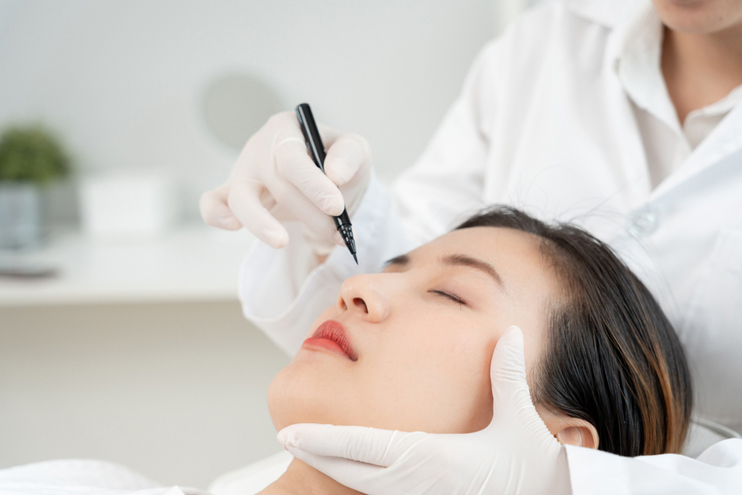
Customized rhinoplasty begins with a detailed consultation, including:
Facial and nasal structure analysis
Discussion of patient goals
Explanation of realistic outcomes
Individualized surgical planning
The surgeon who consults also performs the surgery and follow-up care, ensuring continuity and trust.
Benefits of Rhinoplasty by Type

Type-based rhinoplasty offers several advantages:
Tailored results based on individual anatomy
Natural and harmonious facial balance
Improved facial proportion and symmetry
Long-term structural stability and satisfaction
By focusing on facial harmony rather than trends, patients can achieve refined and individualized results.
Rhinoplasty for International Patients
Gangnam, Seoul, is a globally recognized destination for medical tourism and plastic surgery. Sharp Plastic Surgery provides services for international patients, including:
English-language assistance
Guidance throughout consultation, surgery, and recovery
A supportive, patient-centered clinical environment
The clinic is conveniently located near Sinnonhyeon Station, making it accessible for international and local patients.
Frequently Asked Questions About Rhinoplasty by Type
Is type-based rhinoplasty suitable for everyone?
Yes. Customized rhinoplasty is suitable for most patients because it is tailored to nasal anatomy and facial structure.
How long is the rhinoplasty recovery period?
Recovery varies depending on the procedure type and surgical extent. Swelling gradually decreases, and final results become visible as healing progresses.
Can revision rhinoplasty be performed?
Yes. Revision rhinoplasty is available for contracted noses or unsatisfactory previous outcomes and requires advanced surgical expertise.
Are rhinoplasty results permanent?
Results are designed to be long-lasting, although natural aging processes continue.
Conclusion: The Role of Customized Rhinoplasty in Facial Harmony
Rhinoplasty by type represents a modern, patient-centered approach to nose surgery, emphasizing individualized design, anatomical precision, and natural results. By classifying nasal shapes and applying tailored surgical techniques, surgeons can achieve balanced, refined, and long-lasting outcomes.
At Sharp Plastic Surgery Clinic, rhinoplasty is performed with meticulous planning, surgeon-led care, and comprehensive safety protocols. Personalized consultation, precise surgical execution, and structured aftercare ensure each patient receives tailored treatment aligned with their facial structure and aesthetic goals.
For individuals considering nose surgery in Gangnam, understanding nasal type and surgical options is an important step toward achieving balanced facial proportions and confident results.
Other Services
Explore additional treatments offered by our specialists.

Facial Liposuction Revision Surgery
Facial liposuction revision surgery is a corrective procedure performed after an initial facial fat liposuction treatment when the results are unsatisfactory.
Learn More
Rhinoplasty by Type
Rhinoplasty by type refers to customized surgical techniques designed according to specific nasal shapes and anatomical features.
Learn More

Mid-Facial Lift
Mid-Facial Lift Surgery is a surgical lifting procedure designed to improve sagging in the mid-face region, including the under-eye area, cheeks, and nasolabial folds.
Learn More