Personalized Medical Care & Dedicated International Patient Concierge


Medical Guide
Short Nose Correction: Lengthening a Retracted Nose
Short nose correction lengthens a retracted or upturned nose with cartilage grafts. Learn the anatomy, the septal extension technique and the recovery.
Schedule a ConsultationShort Nose Correction: How to Lengthen a Retracted or Upturned Nose
Medically reviewed by Dr. Kim Un-hoe, M.D., Board-Certified Plastic Surgeon, Sharp Plastic Surgery · Last updated July 2026
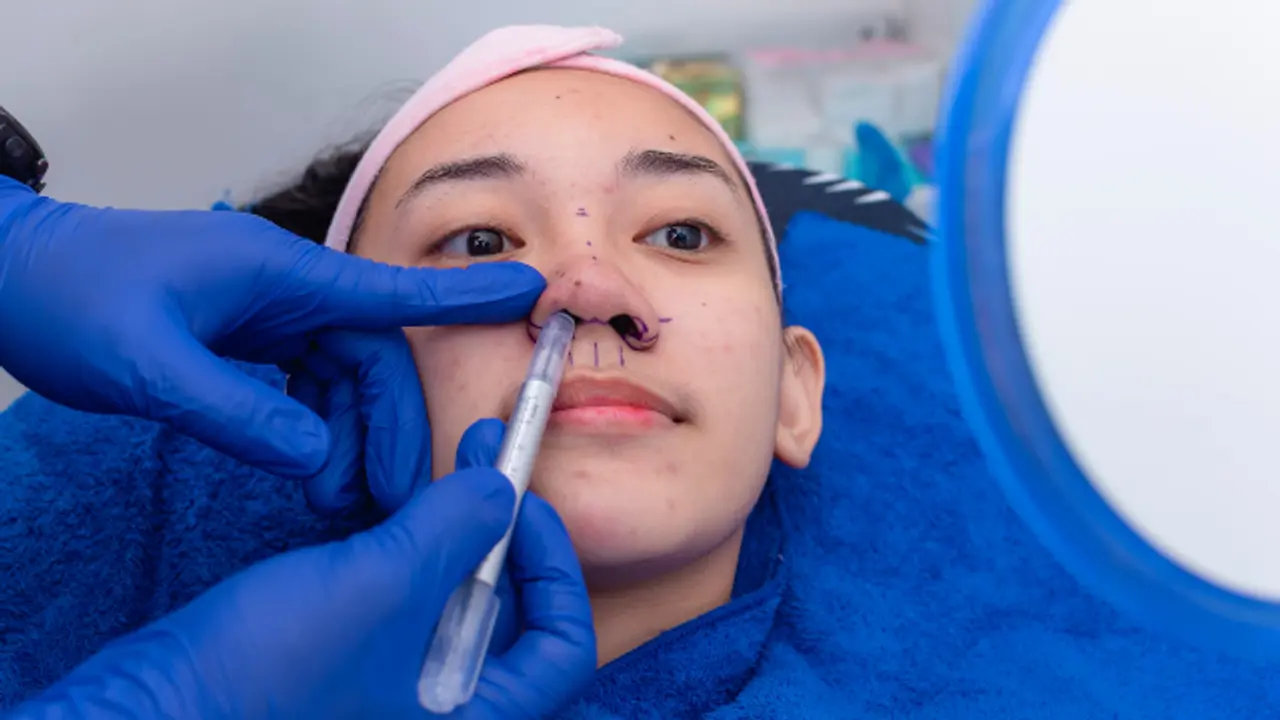
For anyone considering short nose correction Korea has become a popular destination, and the goal is usually to lengthen a nose that appears too short, upturned, or "pulled up," so that the nostrils become less visible from the front. A short nose is corrected by rebuilding the internal framework of the nose with cartilage so the tip can be brought down and forward into a more balanced position. This is a structural surgery rather than a cosmetic touch-up, and at Sharp Plastic Surgery it is planned individually for each face by Dr. Kim Un-hoe. This guide explains the anatomy behind a short nose, how surgeons lengthen it, who tends to be a candidate, and what recovery generally involves.
What is a short nose, and why does it look upturned?
A short nose is one whose overall vertical length, measured from the bridge to the tip, is shorter than the natural proportions of the face, which makes the nostrils more exposed when you look straight ahead. Aesthetically, plastic surgeons often describe an ideal nose as roughly one-third of the vertical height of the face, with a slight downward slope from the tip toward the upper lip. When a nose is short, that slope is reversed: the tip rotates upward, the columella (the strip of skin and cartilage between the nostrils) sits high, and more of the nostril openings shows. This is why the terms "short nose," "retracted nose," and "upturned nose" are often used together.
The cause matters. Some people are simply born with a short nose or weak, springy tip cartilage that pulls the tip upward. Others develop a short or retracted nose after a previous rhinoplasty, when scar contracture (tightening of internal scar tissue) shortens and stiffens the nose over time, or when an implant or graft pushes the tip up. Trauma and certain inflammatory conditions can also shorten the nose. Understanding the underlying cause is essential, because it changes how much support has to be rebuilt and whether the surgery is considered a primary or a revision procedure.
How do surgeons actually lengthen a short nose?
Surgeons lengthen a short nose by adding cartilage grafts that push the tip downward and forward while holding it there against the scar forces that want to pull it back up. The nose cannot simply be "stretched"; it has to be structurally rebuilt so the new, longer shape is stable. The single most important technique for this is the septal extension graft.
- Septal extension graft: A piece of cartilage is fixed to the front edge of the nasal septum (the central cartilage wall that divides the two nostrils) to create a new, extended midline support. The tip cartilages are then secured to this graft in a lower, more forward position. Because it is anchored to the rigid septum, this graft resists the upward pull of scar tissue over time, which is why it is considered the workhorse technique for lengthening.
- Cartilage grafts for the tip and bridge: Additional grafts may reshape and reinforce the tip, refine the bridge, or add projection. These come from the patient's own tissue.
- Release of scar and lining: In revision cases especially, the surgeon often must release contracted internal scar tissue and, if the nasal lining is short, add support so the skin envelope can accommodate the longer framework.
At Sharp Plastic Surgery, rhinoplasty is offered as the clinic's signature SharpRide Rhinoplasty. During the consultation, the surgeon evaluates the shape, skin condition, and structural support of your nose, and discusses whether cartilage grafts, such as septal, ear, or rib cartilage, may be appropriate for your anatomy. The clinic performs both primary and revision rhinoplasty with an emphasis on structural refinement and results that harmonize with the rest of the face. You can read more about the clinic's philosophy on the About Us page.
Where does the cartilage for lengthening come from?
The cartilage used to lengthen a short nose usually comes from one of three sources, each with different characteristics that the surgeon weighs against your needs. Because a short nose needs strong, stable support, the choice of graft material is an important part of surgical planning.
- Septal cartilage: Taken from the patient's own nasal septum, this is often a first choice because it is straight, firm, and located right where the extension graft is needed. Supply can be limited, especially in revision cases where septal cartilage was used before.
- Ear (conchal) cartilage: Harvested from the bowl of the ear, this cartilage is more curved and softer, which makes it useful for tip refinement but less ideal on its own for major lengthening.
- Rib (costal) cartilage: Taken from the lower rib area, this provides the largest and strongest supply and is often needed for significant lengthening or complex revision, where a lot of straight, rigid support is required.
The clinic's consultation process includes a discussion of which graft source may suit your anatomy and goals. No single option is right for everyone, which is why individualized planning matters.
Is short nose correction a revision procedure?
Short nose correction is frequently, though not always, a revision procedure, because a nose that has become shortened or retracted after previous surgery is one of the most common reasons people seek lengthening. Revision rhinoplasty is generally more complex than primary surgery: there is scar tissue to release, the natural cartilage supply may already be reduced, and the nasal lining may be tight. These factors often make grafting from the rib more likely and can lengthen the operation.
Sharp Plastic Surgery lists revision rhinoplasty among its services and describes complex revision rhinoplasty as part of Dr. Kim's subspecialty focus. If you had a rhinoplasty elsewhere and feel your nose looks too short, too upturned, or that your nostrils show too much, a consultation can clarify whether the framework can be rebuilt and what would be involved. You can arrange an assessment through the clinic's consultation and contact page.
Who is a good candidate for short nose correction?
A good candidate is generally a healthy adult whose nose looks short, upturned, or retracted, who has realistic expectations, and whose overall health allows elective surgery. Beyond that, candidacy depends on details that can only be assessed in person, such as the strength of your remaining cartilage, the flexibility of your skin, and the amount of scar tissue present. People considering the surgery often:
- Feel their nose looks too short in proportion to the rest of the face.
- Notice that the nostrils are overly visible from the front.
- Have a tip that points upward more than they would like.
- Developed a shortened or "pinched" nose after a previous rhinoplasty.
- Want to correct a crooked or asymmetrical nose at the same time.
Sharp Plastic Surgery determines eligibility during an individual consultation, where the surgeon evaluates your nasal anatomy, facial balance, medical history, and goals. There is no one-size-fits-all rule; suitability and timing are decided together with the surgeon.
How does the clinic plan the surgery?
Planning begins with a one-on-one consultation with the operating surgeon and a comprehensive assessment of the nose and its relationship to the rest of the face. Sharp Plastic Surgery emphasizes surgeon-led, customized planning rather than a standardized method. The clinic uses advanced imaging, including VECTRA 3D imaging and 3D CT, to study nasal structure and support surgical planning. For a lengthening procedure, this kind of assessment helps the surgeon understand how much extension the skin and lining can tolerate and how much graft support will be required.
A distinctive feature of the clinic is that Dr. Kim Un-hoe personally performs the consultation, surgical planning, and surgery under what the clinic calls a "no shadow doctor" policy, meaning the surgeon who plans your procedure is the one who performs it. For international patients, the clinic provides English-language consultation and support, and coordinates treatment planning before travel. You can view examples of nasal work on the clinic's before-and-after gallery.
What is recovery like after short nose lengthening?
Recovery after structural rhinoplasty is gradual, and swelling around the tip in particular can take many months to fully settle. Every surgeon and clinic manages aftercare individually, and Sharp Plastic Surgery notes that recovery varies with the surgical technique used and the individual patient. In general terms for structural rhinoplasty, you can expect an external splint or cast on the bridge for about a week, visible swelling and possible bruising in the first week or two, and a longer period during which the tip refines. Because a lengthened nose relies on grafts settling into place, surgeons often advise protecting the nose from pressure and impact during early healing.
Sharp Plastic Surgery schedules postoperative follow-up visits to monitor healing and will advise international patients on when travel is appropriate based on their individual recovery. Results become more apparent as swelling subsides, and the final shape is assessed over the following months. Individual healing varies, and no specific outcome can be guaranteed.
What affects the cost of short nose correction?
The cost of short nose correction depends on the complexity of your case rather than a single fixed price, so the clinic determines it after an in-person assessment. Factors that typically influence cost include whether the surgery is primary or revision, how much lengthening is needed, the source of cartilage used (septal, ear, or rib), the amount of scar tissue to be released, and whether other concerns are addressed at the same time. Because revision and rib-cartilage cases are more involved, they generally require more planning and operating time. For a personalized estimate, the clinic asks that you discuss your goals directly during a consultation, where the surgeon can explain what your specific case would involve.
The Bottom Line
- A short nose looks upturned because its vertical length is reduced and the tip is rotated upward, exposing more of the nostrils; correction lengthens and stabilizes the nose.
- The core technique is the septal extension graft, which anchors new cartilage to the septum to bring the tip down and forward and to resist the scar forces that shorten the nose.
- Cartilage may be taken from the septum, ear, or rib depending on how much strong support your case needs.
- Short nose correction is often a revision procedure after previous surgery, which tends to make it more complex; Sharp Plastic Surgery offers both primary and revision rhinoplasty.
- Every plan is individualized by Dr. Kim Un-hoe, results develop gradually over months, and candidacy and cost can only be determined at consultation.
Frequently Asked Questions
**Can a short nose be lengthened without an implant?**Yes. Lengthening is typically achieved with cartilage grafts, most importantly a septal extension graft, rather than with a synthetic implant. At Sharp Plastic Surgery, the consultation includes a discussion of whether septal, ear, or rib cartilage is most appropriate for your anatomy, so the framework can be rebuilt using your own tissue where suitable.
**What is a septal extension graft?**A septal extension graft is a piece of cartilage fixed to the front edge of the septum to create new midline support, allowing the tip to be positioned lower and further forward. Because it is anchored to the rigid septum, it helps hold the longer shape against the scar tissue that naturally tends to pull the tip upward over time.
**Is short nose correction usually a revision surgery?**It often is. A nose that has become short, retracted, or overly upturned after a previous rhinoplasty is one of the most common reasons people seek lengthening. Sharp Plastic Surgery lists revision rhinoplasty among its services, and revision cases are generally more complex because of scar tissue and reduced cartilage supply.
**Who performs the surgery at Sharp Plastic Surgery?**Dr. Kim Un-hoe, a board-certified plastic surgeon, personally performs the consultation, planning, and surgery under the clinic's "no shadow doctor" policy. This means the surgeon who plans your rhinoplasty is the one who carries it out.
**How long is the recovery?**An external splint is generally worn for about a week, with visible swelling and possible bruising in the first week or two. The tip refines gradually over the following months. Sharp Plastic Surgery schedules follow-up visits and advises international patients on travel timing based on individual healing, which varies from person to person.
**Will the results be permanent?**Structural rhinoplasty aims for a long-lasting, stable result, and grafts anchored to the septum are designed to hold the new length. However, individual anatomy, skin quality, and healing response all affect the outcome, and no result can be guaranteed. Your surgeon will discuss realistic expectations during the consultation.
**Can short nose correction be combined with other nose concerns?**Yes. Lengthening is often planned alongside correction of a crooked nose, tip refinement, or bridge reshaping, because the goal is overall facial harmony rather than a single change. What can be combined is decided during an individualized consultation and facial analysis.
This article is for general informational purposes and does not constitute individualized medical advice. Diagnosis, candidacy, and treatment can only be determined through consultation with a qualified clinician.
More Articles
Continue reading our clinical guides.
Septal Extension Rhinoplasty: Nasal Length & Tip Projection
Septal extension rhinoplasty uses your own cartilage to add nasal length and tip projection. Learn how it works, septum vs rib grafts, and who qualifies.
Learn More

Alar Reduction & Nostril Reshaping: Narrow a Wide Nasal Base
Alar reduction narrows a wide nasal base and reshapes flared nostrils. Learn how the technique works, scarring, recovery, and how a wide nose is assessed.
Learn More

Bulbous Nose Correction: Refining a Round Tip, No Implant
Bulbous nose correction refines a round nasal tip by reshaping your own cartilage, with no implant. Learn the techniques, candidacy, and recovery timeline.
Learn More