Personalized Medical Care & Dedicated International Patient Concierge

Medical Guide
Silhouette Soft vs PDO Thread Lift: Types Compared
Silhouette Soft vs PDO thread lifting explained: how each thread type lifts facial sagging, how long results last, and who is a good candidate for each.
Schedule a ConsultationSilhouette Soft vs PDO Thread Lifting: Comparing Two Thread Types for Facial Sagging
Medically reviewed by Dr. Kim Un-hoe, M.D., Board-Certified Plastic Surgeon, Sharp Plastic Surgery · Last updated July 2026
If you are researching a Silhouette Soft thread lift Korea patients often ask about, and comparing it against PDO thread lifting, the most useful first step is to understand that these are two different types of absorbable thread rather than two brands doing the same thing. Both are used to lift mild facial sagging without a surgical facelift, but they are made from different materials, lift the tissue in different ways, and tend to behave differently over time. This guide explains how each thread type works so you can have a more informed conversation at consultation. It is general medical education, not a recommendation of any single product.
What is thread lifting?
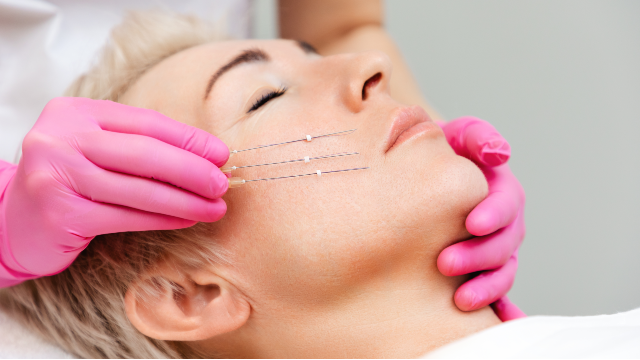
Thread lifting is a non-surgical procedure in which fine, dissolvable sutures are inserted under the skin to reposition sagging soft tissue and stimulate the skin's own collagen. The threads are placed through tiny entry points using a thin needle or cannula, then gently drawn to lift areas such as the cheeks, jawline, or brow. Because there are no large incisions, thread lifting is often described as a minimally invasive option, with less downtime than a surgical lift.
Threads work in two ways at once. First, there is an immediate mechanical effect: the thread physically supports and repositions the tissue, producing a subtle lift you can often see on the day of treatment. Second, there is a slower biological effect: as the body gradually absorbs the thread material, it triggers a mild healing response that encourages new collagen to form around the treatment path. This collagen stimulation is the reason results can continue to develop for weeks after the threads themselves have started to dissolve.
It is important to set expectations early. Thread lifting is best suited to mild or early sagging. It does not remove skin or fat, and it cannot reproduce the degree of change a surgical facelift achieves. For that reason it is often discussed as a "bridge" option for people who are not yet ready for surgery, or as a maintenance step. Results are temporary and vary from person to person.
PDO threads: the widely used absorbable option
PDO stands for polydioxanone, a synthetic, absorbable material that has been used in surgery for decades as a dissolvable suture. In thread lifting, PDO threads come in several forms. Smooth or "mono" threads are used mainly to stimulate collagen and improve skin texture rather than to lift. Barbed or "cog" threads have tiny projections along their length that grip the underlying tissue, allowing the surgeon to reposition and hold sagging areas. Twisted or "screw" threads are sometimes used to add localized volume.
PDO is generally the fastest-absorbing of the common thread materials. The thread itself is typically broken down by the body over roughly four to six months, although the collagen it stimulates can persist somewhat longer. Because PDO threads are widely available, relatively affordable per thread, and versatile, they are among the most commonly used threads worldwide. Practitioners often place a larger number of PDO threads in a single session to build a supportive framework.
The trade-off is duration. Because PDO breaks down comparatively quickly, the visible lift from PDO threads tends to be shorter-lived than that of some longer-lasting materials, which is why some patients choose to repeat treatment periodically.
Silhouette Soft: PLLA cone-suspension threads
Silhouette Soft is a brand of thread made from poly-L-lactic acid, usually abbreviated PLLA. PLLA is a different absorbable polymer, also long used in medicine, and it is known for its strong collagen-stimulating properties. What distinguishes this particular design is that instead of barbs, it uses small bidirectional cones threaded along the suture. These cones anchor into the tissue on either side of a central point, so the thread can be used in a "suspension" technique: the surgeon repositions the sagging tissue and the cones hold it in the lifted position.
Because PLLA is absorbed more slowly than PDO, the material typically remains in the tissue longer, and manufacturers generally describe the lifting effect as lasting up to around 18 months, with collagen-related skin quality benefits continuing as the material dissolves. The cone-and-suspension design is intended to give a firmer initial anchoring effect using fewer threads than a barbed approach might require.
The trade-offs are that PLLA cone threads are usually more expensive per thread than PDO, and, as with any thread, the final result still depends heavily on the individual's tissue quality, the amount of sagging, and technique. Longevity figures quoted by manufacturers are averages; your own experience may differ.
Silhouette Soft vs PDO: how the two thread types compare
Setting the two thread types side by side helps clarify the practical differences:
- Material: PDO (polydioxanone) versus PLLA (poly-L-lactic acid). Both are absorbable polymers with a long track record in surgery.
- Lifting mechanism: PDO lifting threads usually rely on barbs (cogs) that grip tissue; PLLA cone threads use bidirectional cones in a suspension technique.
- Typical duration: PDO material commonly absorbs over about four to six months; PLLA cone threads are generally described as lasting up to around 18 months, though results vary.
- Collagen stimulation: Both stimulate collagen; PLLA is particularly associated with a strong, gradual collagen response.
- Number of threads: Barbed PDO approaches may use more threads to build support; cone-suspension designs aim for anchoring with fewer threads.
- Relative cost per thread: PDO threads are generally less expensive per thread; PLLA cone threads typically cost more.
- Best-suited concern: Both target mild to moderate sagging of the cheeks, jawline, and mid-face; neither replaces surgery for advanced sagging.
There is no single "better" thread for everyone. The right choice depends on how much sagging you have, your skin thickness and elasticity, how long you want results to last, and how the two options fit your budget and schedule. A surgeon who examines your face in person is best placed to advise which thread type and technique suit your anatomy.
How thread lifting fits at Sharp Plastic Surgery
Sharp Plastic Surgery, a facial-focused plastic surgery clinic established in 2022 in Seocho-gu, Seoul, offers thread lifting as a non-surgical lifting option through its branded "Sharp Thread Lift" system. The clinic's thread lifting uses absorbable threads, with documented thread materials including PDO, PLLA, and PCL (polycaprolactone). Rather than promoting a single fixed product, the clinic's approach is to plan treatment individually around each patient's facial structure and goals.
A key feature of the clinic is its "no shadow doctor" policy: all consultations and surgeries are personally performed by Dr. Kim Un-hoe, a board-certified plastic surgeon and graduate of Hanyang University College of Medicine with more than 15 years of experience and over 1,000 surgeries. This means the surgeon who assesses your face and recommends a thread type is the same person who performs the procedure, supported by one-to-one consultation. If you are weighing thread lifting against other options, you can discuss your goals directly through the clinic's consultation and contact page, and you can read more about the clinic's philosophy on its about page.
Because thread lifting does not remove fat, it is sometimes discussed alongside other facial contouring procedures. For patients whose main concern is excess fat rather than sagging skin, the clinic also performs facial fat liposuction; for those with volume loss, it offers fat grafting. Which combination, if any, makes sense is a decision made during personalized assessment, not from a website.
Who is a good candidate for thread lifting?
Thread lifting tends to suit people who:
- Have mild to moderate sagging of the cheeks, jawline, or brow and want a subtle lift.
- Are not ready for, or do not need, a surgical facelift.
- Prefer a procedure with minimal downtime.
- Have reasonably good skin quality, which helps the lift hold and the collagen response develop.
- Understand that results are gradual, temporary, and vary between individuals.
Thread lifting is generally less effective for people with significant skin laxity or heavy soft tissue, where a surgical lift may achieve more durable results. As with any procedure, your medical history and any medications are reviewed at consultation. The only reliable way to know whether you are a candidate, and which thread type fits, is an in-person evaluation.
What about the cost of thread lifting?
Cost is one of the most common questions, and it is also one of the hardest to answer online. Thread lifting is usually priced in a way that reflects the type of thread used and the number of threads needed, so a PLLA cone-suspension plan and a barbed PDO plan can differ considerably even for the same area. Longevity matters too: a longer-lasting thread that costs more up front may involve fewer repeat sessions over time, while a lower per-thread cost may mean more frequent maintenance.
For these reasons, a meaningful cost estimate really only comes from a personalized consultation, where the surgeon can assess your sagging, recommend a thread type, and explain how many threads your plan involves. Sharp Plastic Surgery provides individualized planning and will discuss what your specific treatment involves during consultation. You can also look at the clinic's before-and-after reference page to understand the kinds of concerns thread lifting and related procedures address.
The Bottom Line
- Silhouette Soft (PLLA cone-suspension) and PDO threads are two different absorbable thread types used to lift mild facial sagging, not two names for the same product.
- PDO threads generally absorb faster (about four to six months) and cost less per thread; PLLA cone threads are typically longer-lasting (often described as up to around 18 months) and cost more.
- Both stimulate collagen, and neither replaces a surgical facelift for advanced sagging.
- Sharp Plastic Surgery offers thread lifting with absorbable threads (documented PDO, PLLA, and PCL) through its "Sharp Thread Lift" system, planned individually by Dr. Kim Un-hoe.
- The best thread type for you depends on your anatomy, goals, and budget, which are best assessed in a one-to-one consultation. Results vary.
Frequently Asked Questions
**Does Sharp Plastic Surgery use Silhouette Soft threads?**Sharp Plastic Surgery offers thread lifting using absorbable threads, with documented thread materials including PDO, PLLA, and PCL, through its "Sharp Thread Lift" system. The specific thread type used for you is determined during a personalized consultation with Dr. Kim Un-hoe. This article compares thread types in general and does not state that any single brand is used.
**Which thread lift lasts longer, PLLA or PDO?**In general, PLLA (the material used in cone-suspension threads such as Silhouette Soft) is absorbed more slowly than PDO, so its lifting effect is often described as lasting longer, up to around 18 months, compared with roughly four to six months for PDO material. These are averages, and individual results vary with skin quality and the degree of sagging.
**Is thread lifting painful?**The procedure is typically performed under local anesthesia, and most people describe some pressure or mild discomfort rather than significant pain. Temporary tenderness, swelling, or bruising can occur afterward. Your surgeon will explain the anesthesia plan and what to expect during your consultation.
**How long is the recovery after a thread lift?**Thread lifting generally involves less downtime than surgery. Mild swelling, bruising, or a pulling sensation can last a few days to a couple of weeks. You will usually receive aftercare guidance such as avoiding vigorous facial movement and sleeping position advice. Recovery varies by person and by how many threads are placed.
**Can thread lifting be combined with other facial procedures?**Yes, thread lifting is sometimes discussed alongside procedures such as facial fat liposuction or fat grafting, depending on whether your main concern is sagging, excess fat, or volume loss. At Sharp Plastic Surgery, any combination is decided through individualized planning during consultation rather than offered as a fixed package.
**Am I a good candidate for a thread lift or do I need surgery?**Thread lifting suits mild to moderate sagging with reasonable skin quality. If you have significant skin laxity, a surgical facelift may give more durable results. Only an in-person assessment can determine which approach fits your anatomy and goals.
This article is for general informational purposes and does not constitute individualized medical advice. Diagnosis, candidacy, and treatment can only be determined through consultation with a qualified clinician.
More Articles
Continue reading our clinical guides.
Septal Extension Rhinoplasty: Nasal Length & Tip Projection
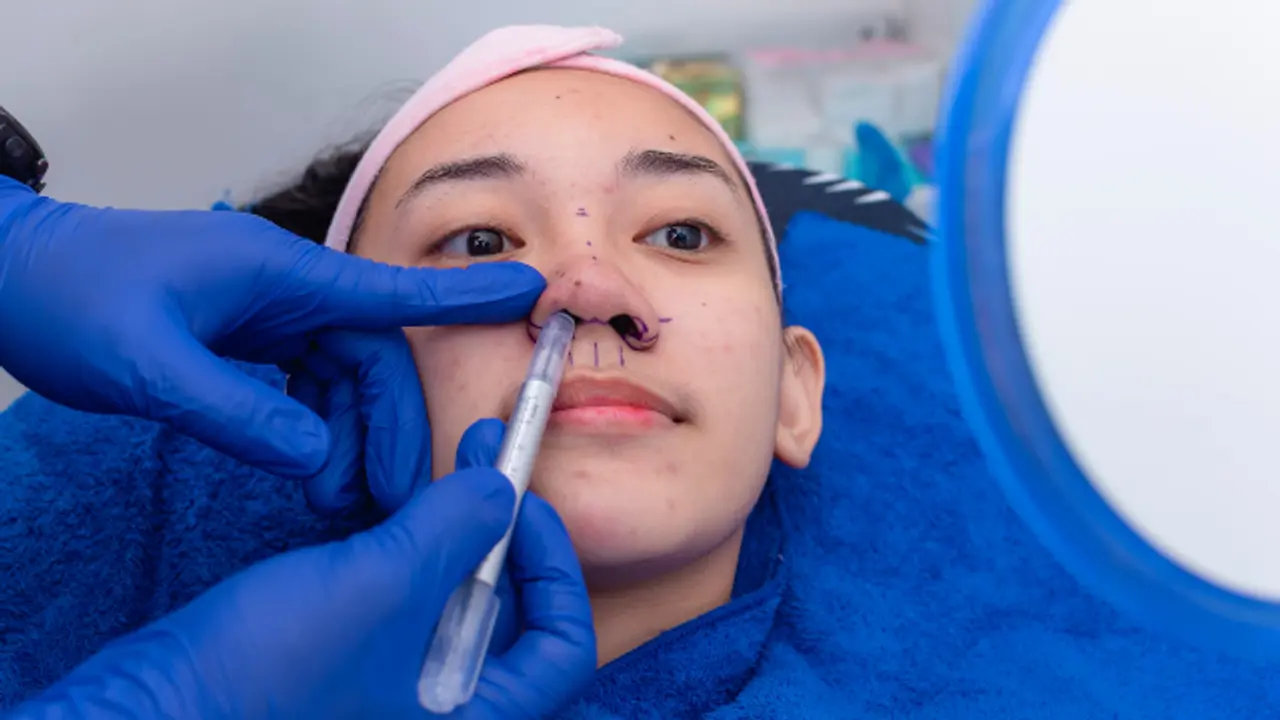
Septal extension rhinoplasty uses your own cartilage to add nasal length and tip projection. Learn how it works, septum vs rib grafts, and who qualifies.
Learn More

Alar Reduction & Nostril Reshaping: Narrow a Wide Nasal Base
Alar reduction narrows a wide nasal base and reshapes flared nostrils. Learn how the technique works, scarring, recovery, and how a wide nose is assessed.
Learn More
Bulbous Nose Correction: Refining a Round Tip, No Implant
Bulbous nose correction refines a round nasal tip by reshaping your own cartilage, with no implant. Learn the techniques, candidacy, and recovery timeline.
Learn More